
True change begins by centering survivor leadership, expertise, and experience.
“Survivors are not only demanding change. They are building new models of activism, justice, and collective action.”
Ram Bhandari, Co-founder of ARC for Justice and INOVAS.
Sustaining and supporting survivor leaders.
Across contexts and generations, survivor movements have shown that people directly affected by atrocities can become powerful forces for accountability, healing, and lasting change.
From the Mothers of Srebrenica to the Madres de Plaza de Mayo, survivors have organized, preserved truth, challenged institutions, sought justice, rebuilt communities, and reshaped public understandings of what meaningful change requires.
Sustaining that leadership is extraordinarily difficult. Trauma, burnout, security threats, financial pressures, and the demands of navigating complex institutions can take a significant toll.
ARC exists to support survivors already doing this work, so they have greater access to the expertise, relationships, resources, and support they need to lead change over the long term.

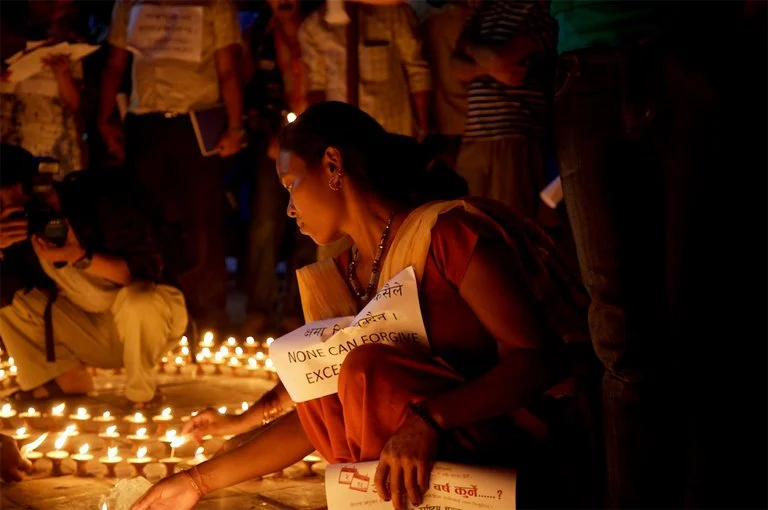
In observance of International Women's Day, women in Monrovia staged a peaceful sit-in protest against gender-based violence. UN Photo/Eric Kanalstein.
The existing systems for responding to atrocities frequently tokenize, sideline, retraumatize, and strip agency from survivors—sometimes exploiting or extracting from them in the process.
Our goal is to help move atrocity response away from fragmented interventions and towards approaches that consider justice, healing, recovery, and lasting peace together.
We do this by working directly with survivor leaders to change how the system itself operates. ARC turns survivor experience, research, and cross-disciplinary expertise into practical insight for policymakers, donors, practitioners, and institutions.
In this way, our work with survivor leaders and with atrocity response systems is self-reinforcing. Not only are survivor leaders better positioned to shape the systems affecting their communities, the institutions serving them gain stronger evidence about what survivors need and what more effective responses can look like.
Changing the systems in which survivors operate.
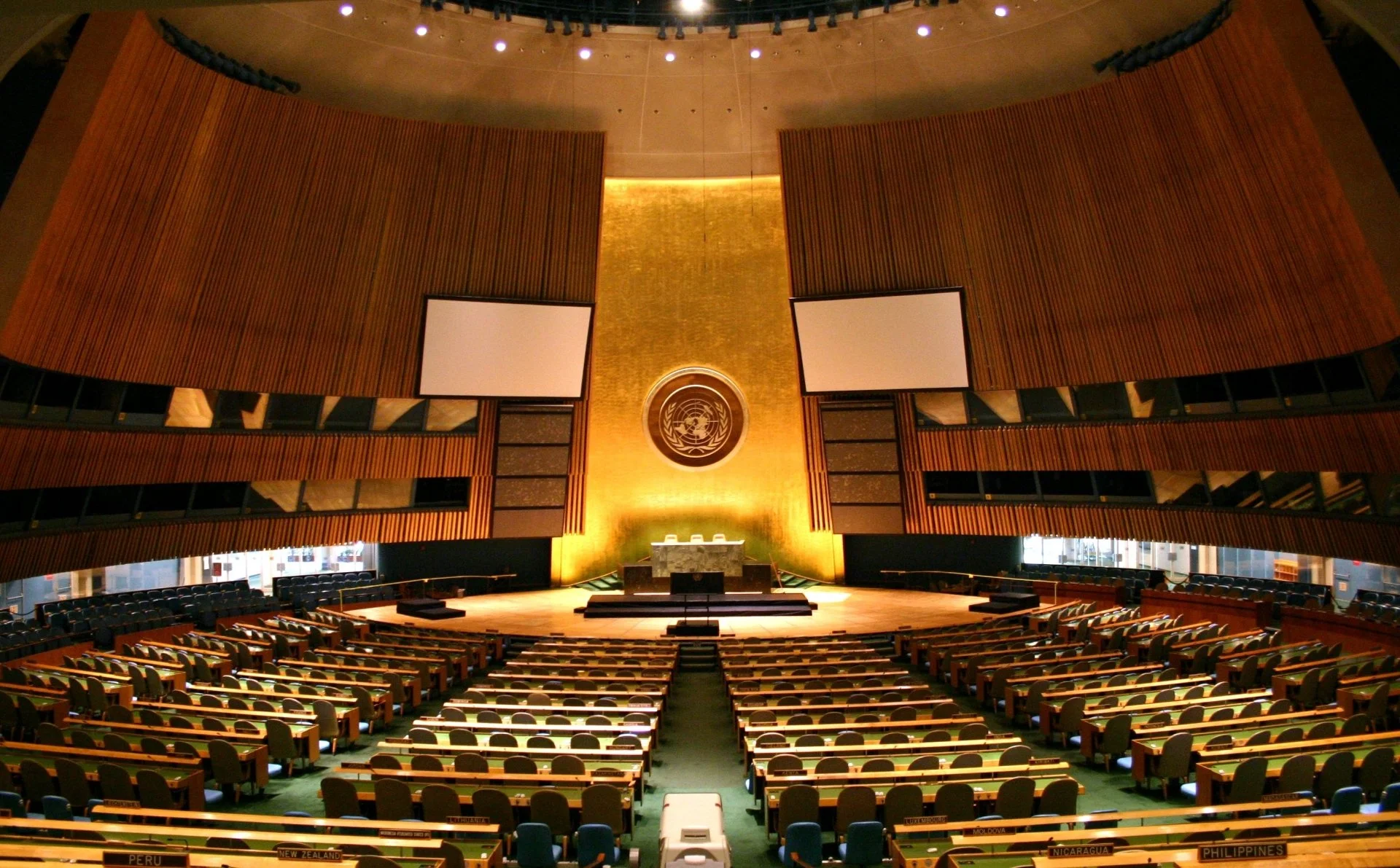
UN General Assembly Hall. Patrick Gruban.
Survivor-centered: Those who bear the harm should have real power in shaping how it is addressed. We treat survivors as experts and partners, not simply beneficiaries, and continually challenge ourselves to live up to that principle.
Trauma-informed: Trauma shapes leadership, relationships, and decision-making. We work to reduce the risk of further harm and to ensure that healing is considered alongside justice, accountability, and recovery.
Evidence-based: We listen to what survivors and communities say they need and pair that knowledge with research and data about what works. We use both to inform action, test assumptions, and improve our approach over time.
The arc of history does not bend on its own. It bends because people act through persistence, collective action, and the leadership of those most affected. ARC exists to help survivors and their allies bend the arc of history towards justice, healing, and lasting peace.

Our values.
Ayacucho women walking through the main square on a Saturday morning. Bernarda Carrera (2024).
How we work together.
Serving as stewards, not advocates: We operate as a support and research consortium — not an advocacy consortium though individual members may engage in their own advocacy efforts.
Prioritizing care for one another: Survivor leaders and their allies routinely face burnout, vicarious trauma, and competition over scarce resources. We prioritize mutual support, resilience, and collaboration.
Maintaining independence: We preserve the autonomy of individual member organizations, including their internal decision-making processes, while working towards shared goals.
Breaking down silos: Atrocity response involves law, mental health, policy, research, and aid but these disciplines rarely work together. By design, ARC brings this expertise together to develop more coherent and comprehensive response options.
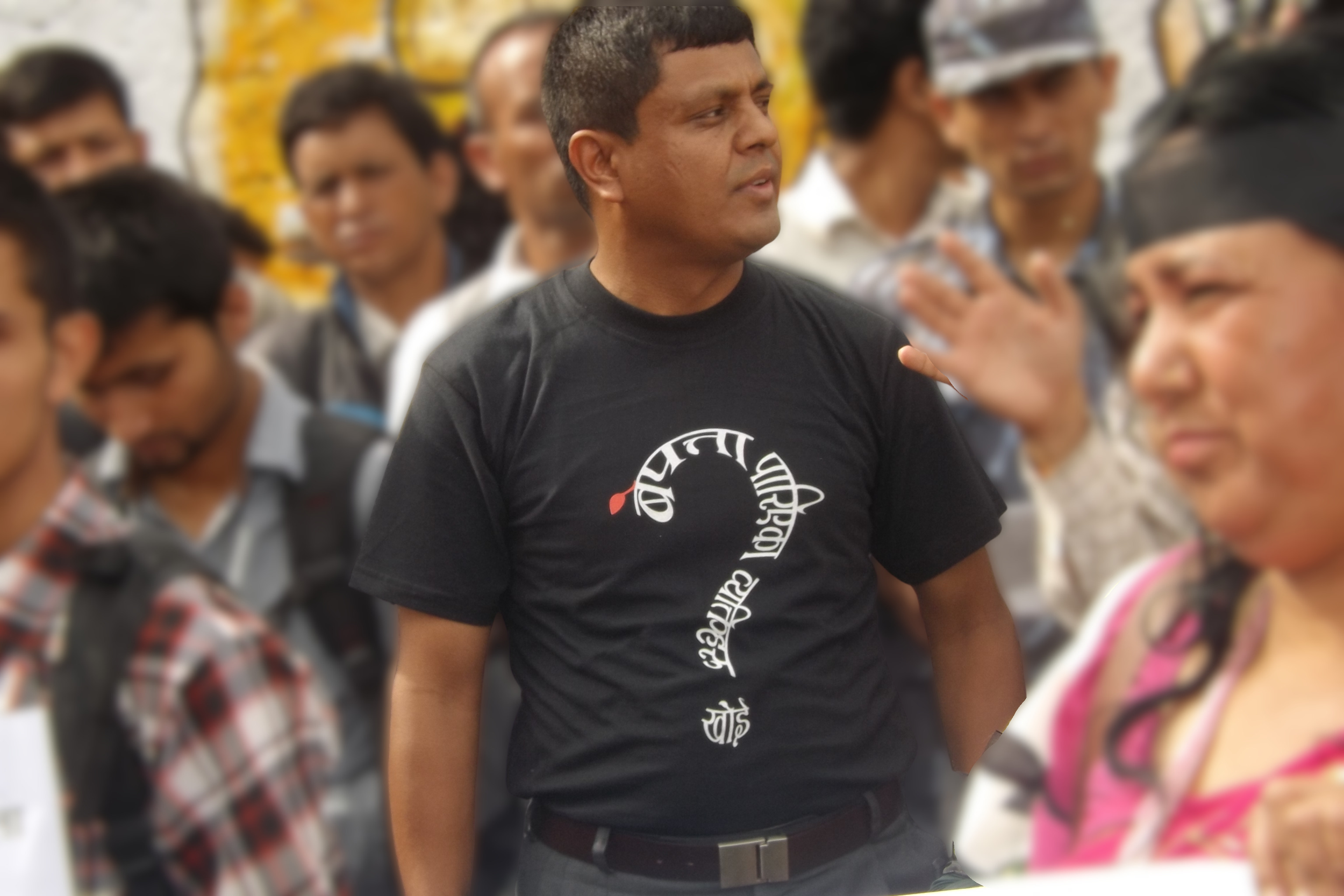
Ram Bhandari, founder of the National Network of Families of the Disappeared and Missing Nepal and co-founder of ARC for Justice.