
From survivor leadership to systems change.
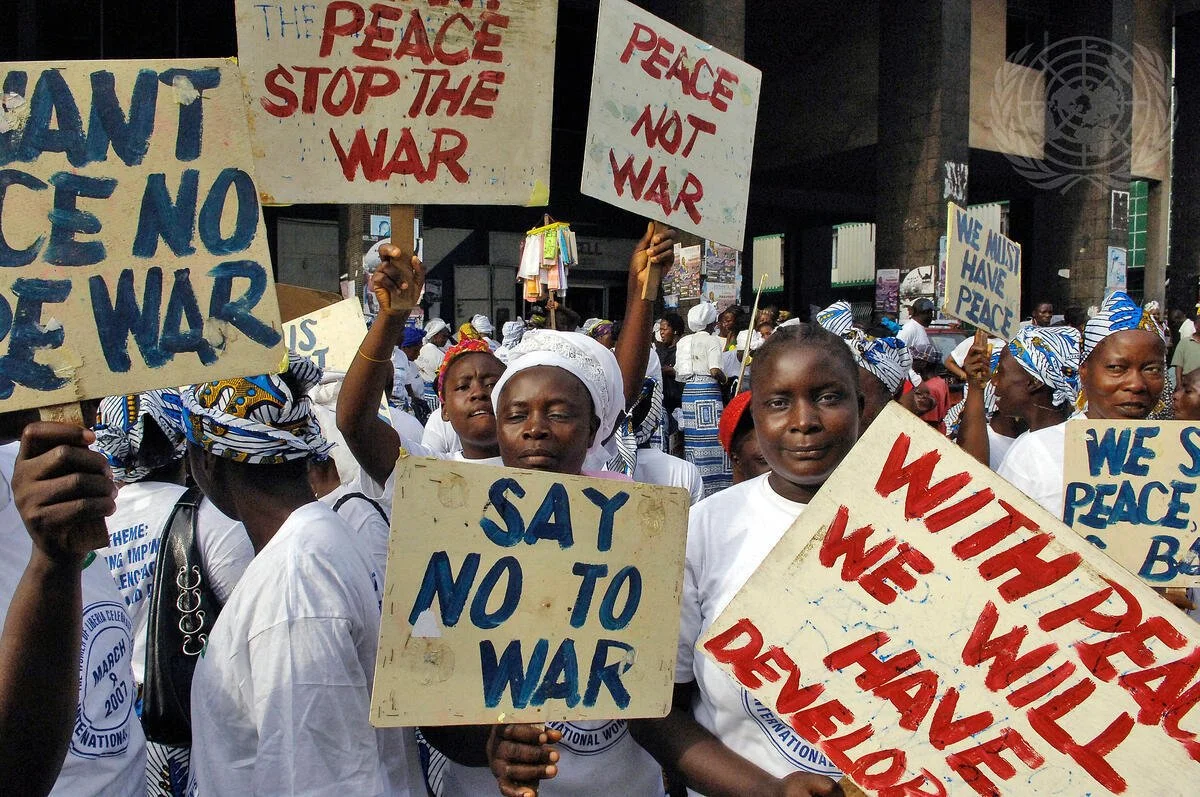
We invest in survivor leaders—those closest to the harm—because that’s where lasting change begins.
UN Photo/Eric Kanalstein.
What we do.
Striving for a new paradigm.
ARC brings together survivor coalition leaders, advocates, storytellers, trauma clinicians, data scientists, researchers, fundraisers, lawyers, and policymakers to transform how systems for responding to atrocities are designed and implemented—putting survivors and healing first. We know this system doesn't always get it right—including at times the very institutions and processes we've worked within.
That experience, alongside the leadership of the survivors within our own consortium, is what drives us toward a new paradigm: one where survivors have a real voice, and where justice doesn't stop in the courtroom.
Our two-pronged approach.
ARC works on both sides of this challenge: strengthening survivor leaders and helping change the institutions, policies, and practices around them.
ARC's two levels of work are intentionally connected. What survivor leaders encounter in practice can reveal systemic barriers, gaps, and opportunities for reform. Research and institutional work can, in turn, give survivor leaders new evidence, tools, relationships, and leverage.
Our work with survivor leaders.
Survivor leaders regularly confront challenges that cut across multiple fields at once: organizational health, trauma and burnout, security, fundraising, legal strategy, policy engagement, communications, research, and movement-building. But these fields are often siloed.
ARC brings survivor leaders together with one another and with specialists across these fields to work through the challenges they identify as most important. Rather than offering a predetermined program, we begin with the problem the survivor leader or coalition is trying to solve, which may include:
Building thriving survivor organizations, including resourcing, institutional strength, security, and trauma and burnout support.
Turning insights and lived experience into strategy and action.
Strategic engagement with justice and policy processes.
Organizing and advocacy that moves pen holders.
With additional support, ARC aims to build a more comprehensive survivor leadership platform combining mentorship, peer networks, leadership development, mental health resources, specialized expertise, cross-context learning, and practical organizational support.
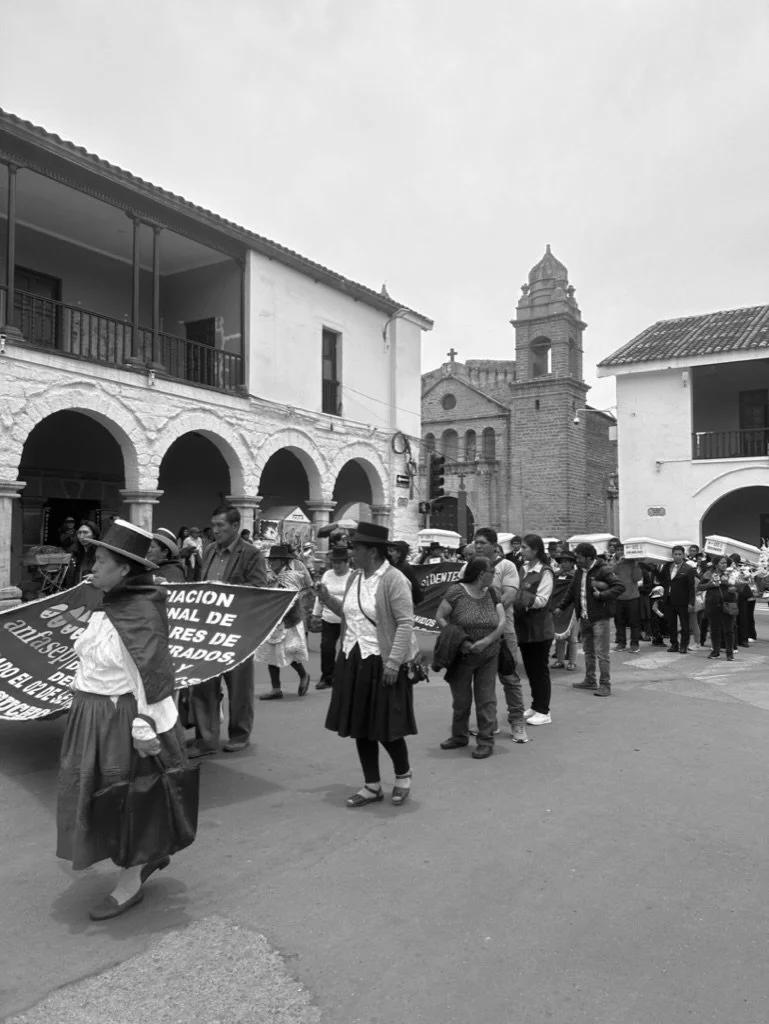
After 41 years of perseverance, indigenous Peruvian women of ANFASEP and other relatives of missing persons received the remains of 26 victims of the Socos Massacre. In a public procession, they marched around the main square, carrying the remains of their loved ones on their shoulders. Bernarda Carrera (2024).
Our work with policy-makers, donors, and institutions.
After atrocities, decisions are often made under intense pressure, with limited resources and incomplete information. Too often, institutions rely on assumptions about what affected communities need or transplant approaches from one context into another. ARC helps replace those assumptions with evidence.
We bring together survivor knowledge, community research, trauma expertise, and interdisciplinary analysis to help decision-makers understand what communities are experiencing, what they prioritize, and what interventions are most likely to be effective. We conduct:
Trauma-informed survivor and community consultation.
Qualitative and quantitative research into issues like survivor priorities and experiences.
Practical policy guidance informed by this evidence, including developing tools and best-practice recommendations.
Cross-disciplinary problem-solving.
ARC uses practical tools to turn survivor-centered and trauma-informed principles into action. With additional support, we will conduct bespoke training and education programs with these audiences on survivor-centered, evidence-based, trauma-informed decision-making.

An interior shot of the Peace Palace, the seat of the International Court of Justice, the principal judicial body of the United Nations. [1993] UN Photo/Andrea Brizzi.
How we define success.
-
For survivor leaders.
Survivor leaders have greater access to the expertise, relationships, resources, and support needed to sustain their work and pursue their priorities.
-
For policy-makers.
Policymakers, donors, and practitioners have stronger evidence and practical tools for designing responses around survivor realities rather than institutional assumptions.
-
For the atrocity response ecosystem.
Lessons from survivor leadership, trauma science, justice, research, and policy begin to inform one another, creating approaches that are more coherent, responsive, and capable of supporting long-term recovery and peace.

How we work
-
Survivors have long articulated a critical guiding principle: “Nothing about us without us.” Solidarity in this belief is the basis of both who we are and what we do as a consortium: we see survivor leaders not just as stakeholders, but as experts and co-equal partners in this work.
-
ARC is global by design. Our members bring long-standing relationships with survivor organizations, civil society, researchers, practitioners, and policymakers across conflict-affected settings and at the international level. Having worked in dozens of countries around the world, our consortium structure allows us to connect experience across contexts without assuming that one model can simply be transplanted into another.
-
We are pooling our resources and expertise to gather the data and evidence of “what works” and what affected communities need, to translate lived experience into information that drives action, and to sustain this work without compromising the well-being or safety of survivor leaders.
Support and strengthen survivor leaders, through sustained strategic support, a leadership platform, and access to trauma and wellbeing resources
Connect and grow survivor-led organizations and movements, by linking efforts across contexts and seeding promising new initiatives
Generate rigorous research and capture field-wide lessons on what survivors need and what actually works
Equip institutions to change through practical tools, consultation, and training for policymakers, donors, and practitioners
Build the infrastructure that sustains this work for the long term